Speaking in Holes — Research, writing & editorial design by Nazlı Can
Speaking in Holes
Research, writing & editorial designFanzine · 2026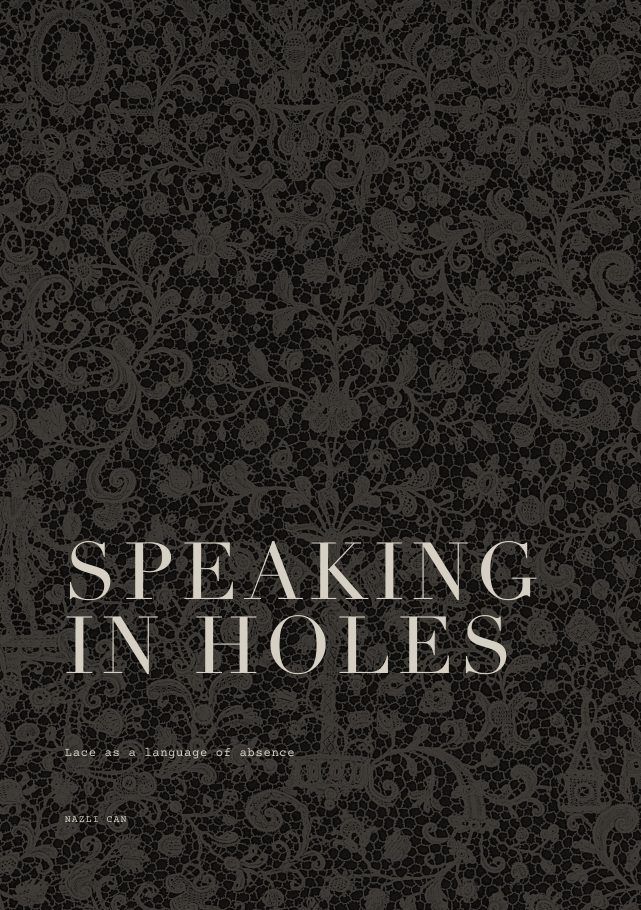
Lace is the only textile made of what is not there.
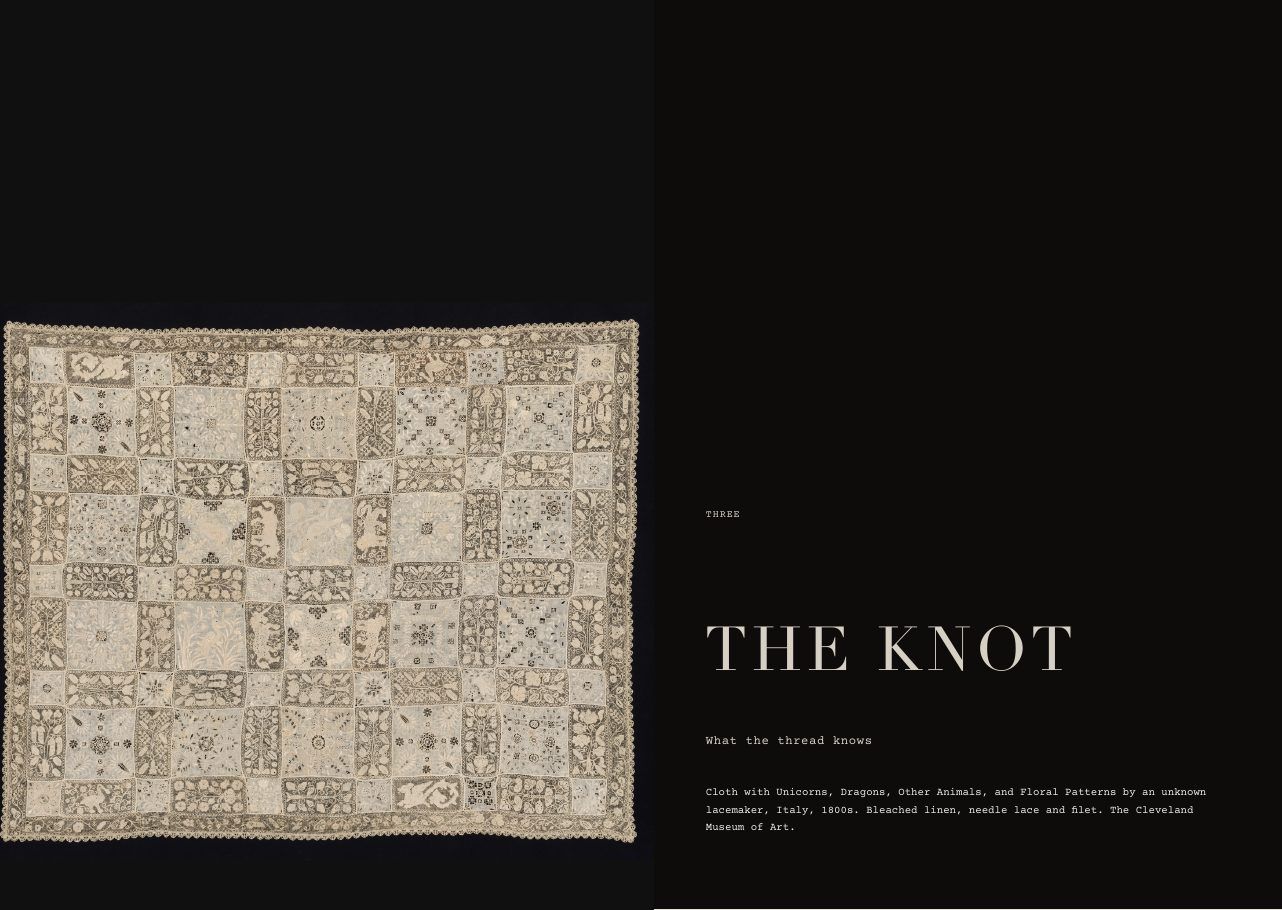
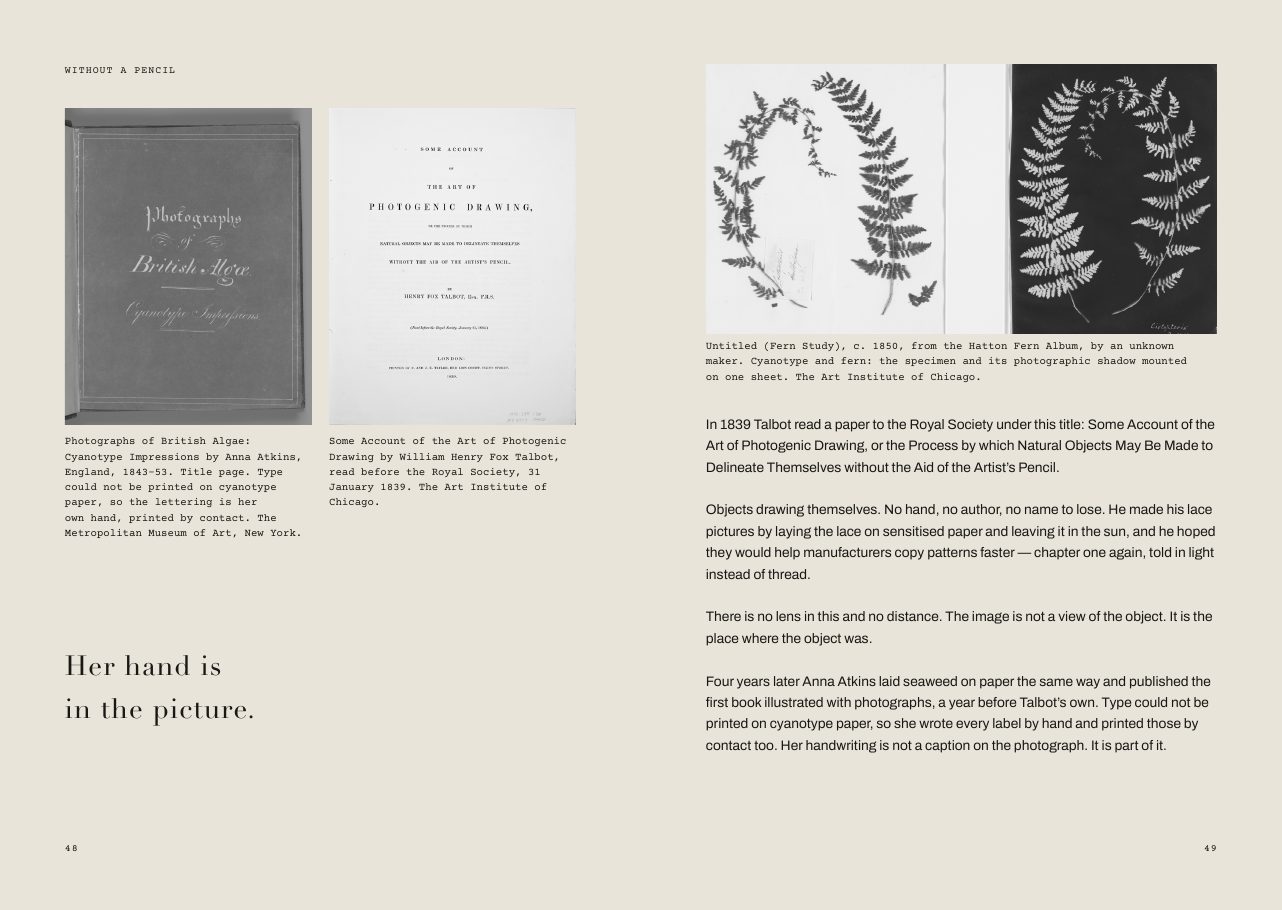
Speaking in Holes is a thirty-one page fanzine written for Image Semiotics at Istituto Marangoni Milano, under Prof. Carlos Gago Rodríguez. It takes one object and asks four questions of it: what a machine cannot copy, what may be looked at, what the thread knows, and what is left behind.
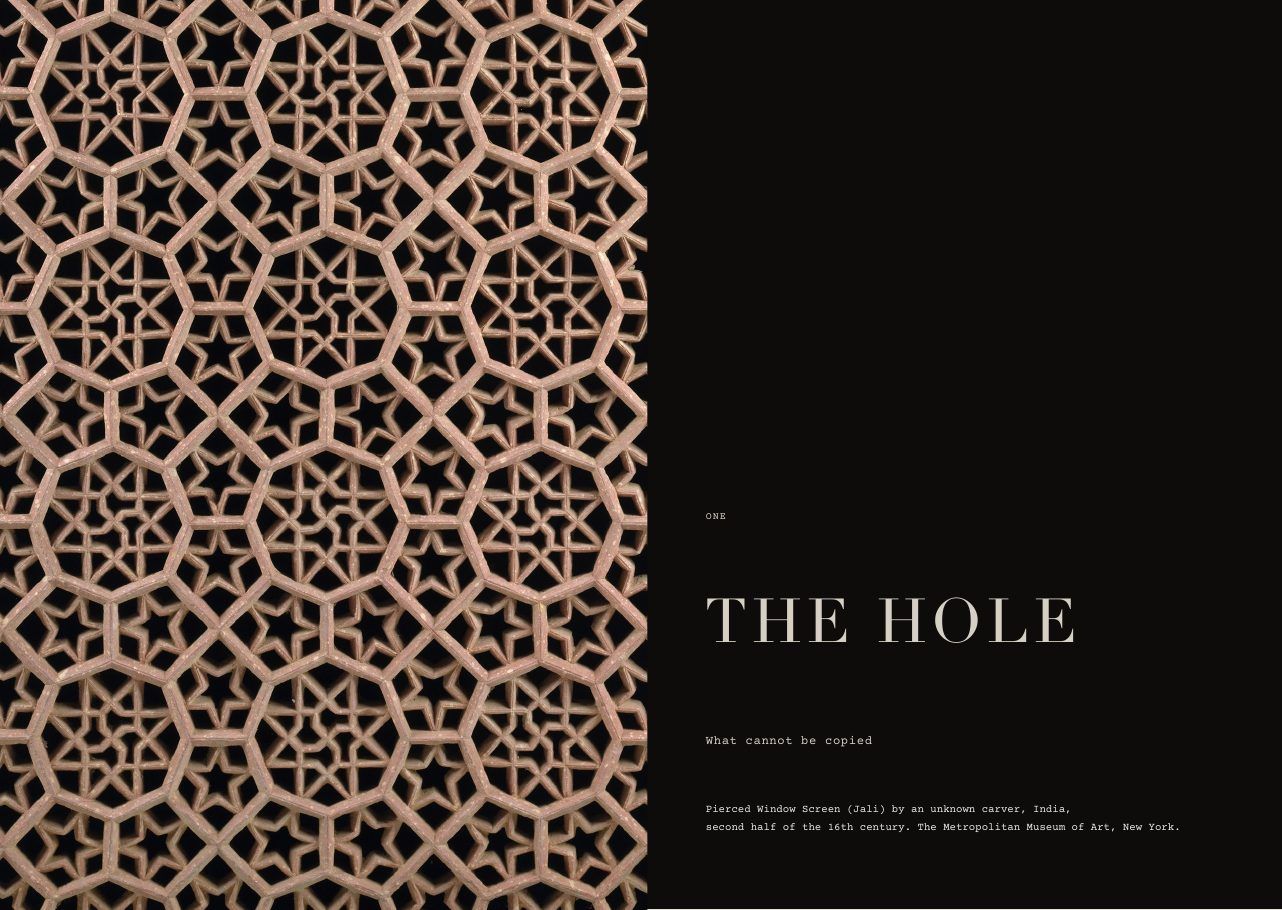
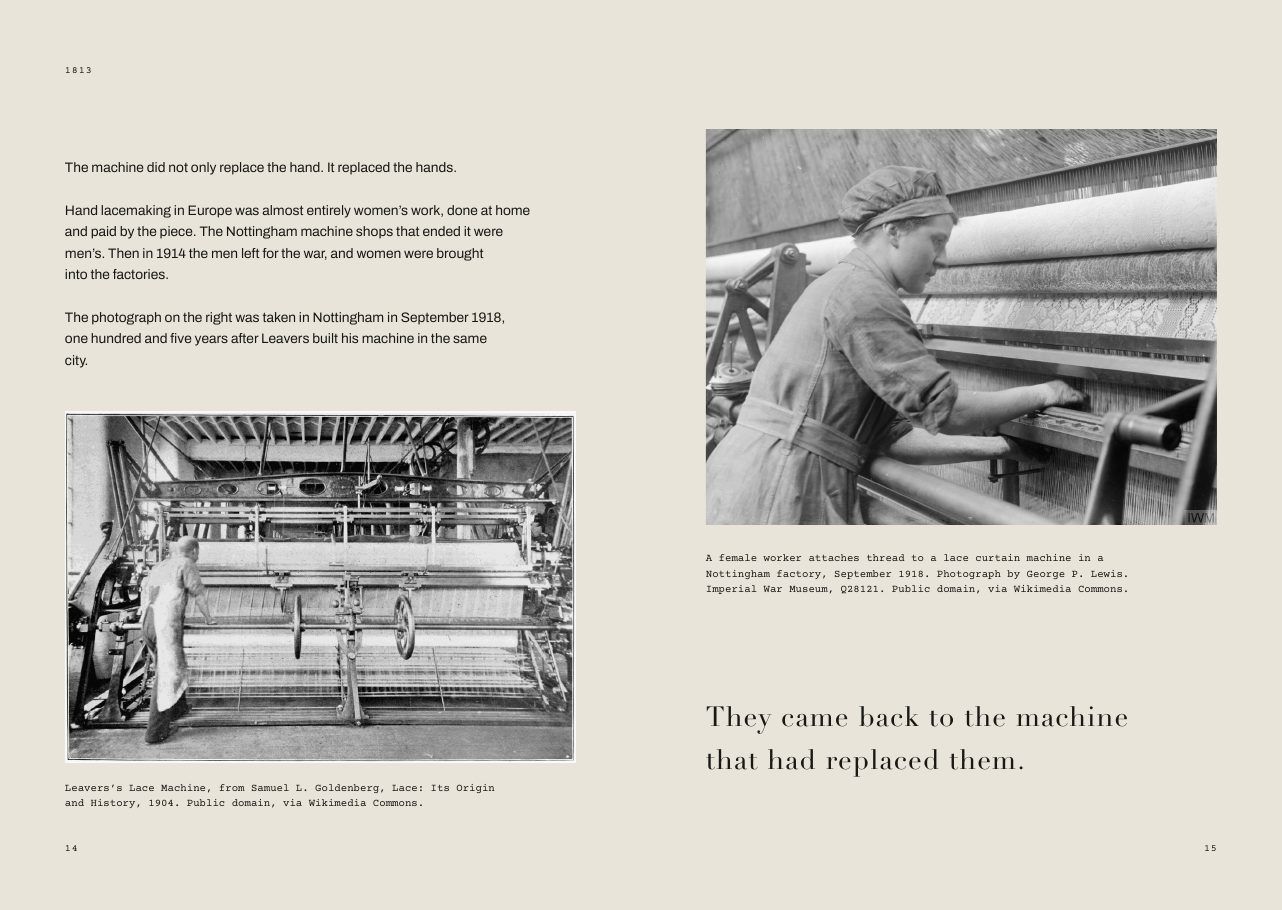
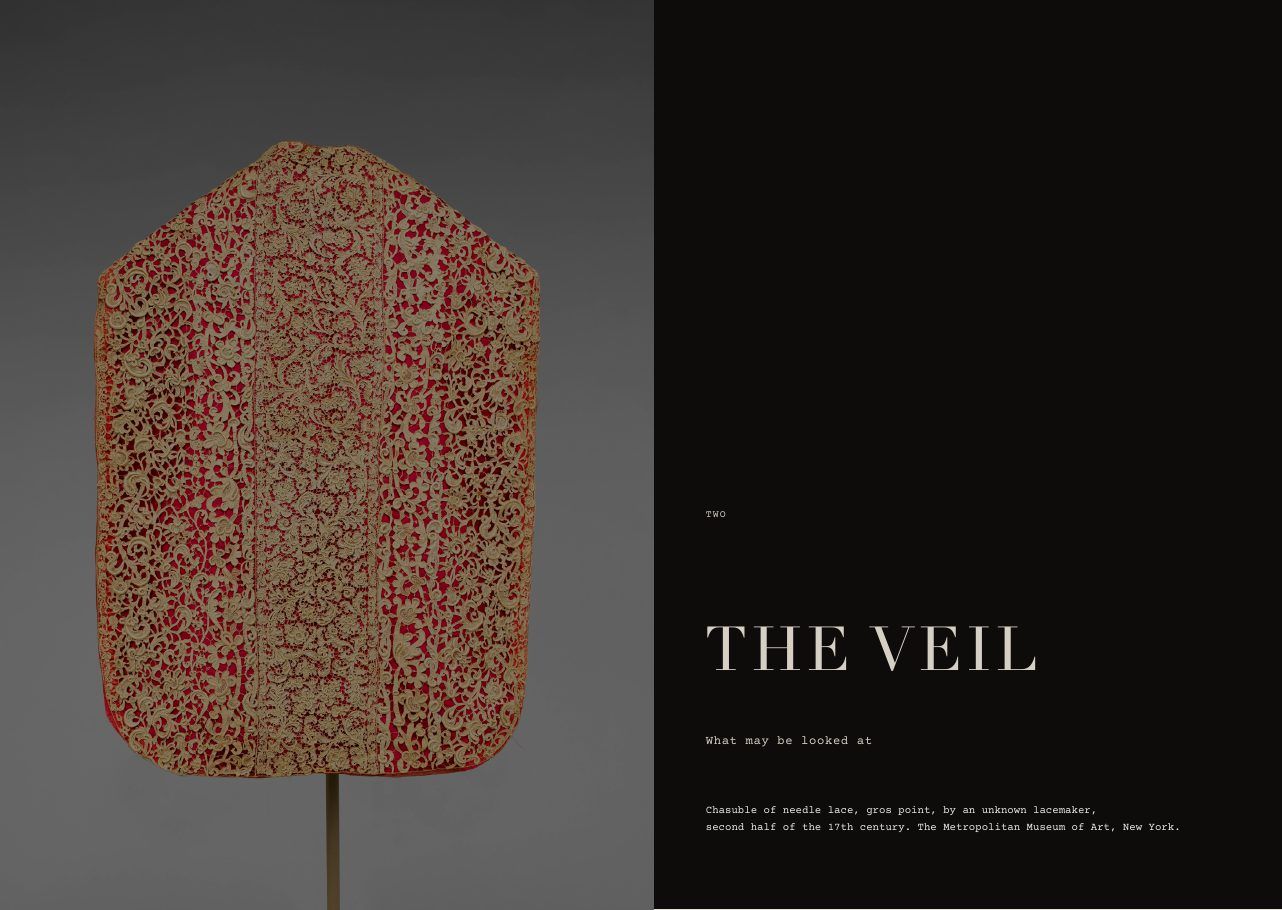
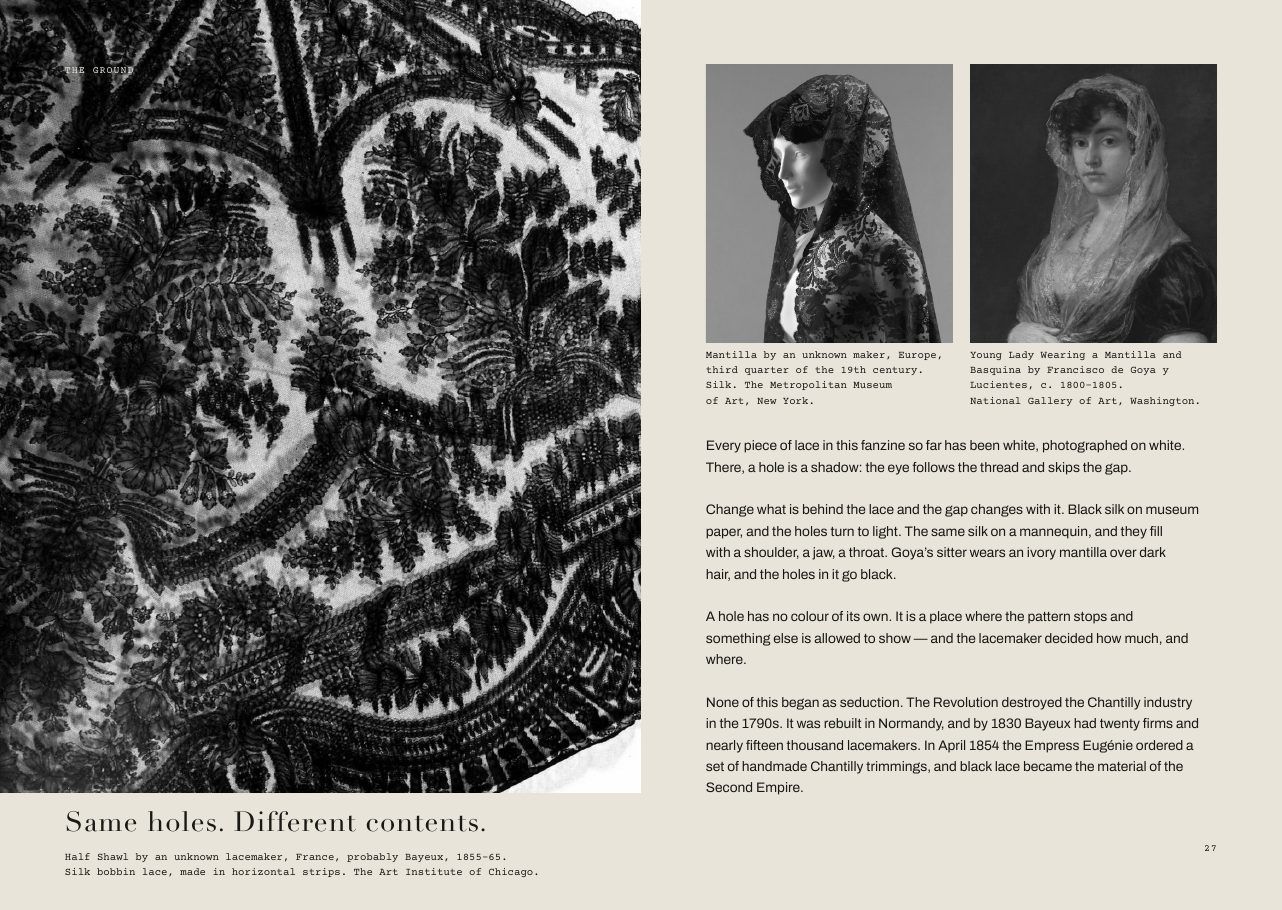
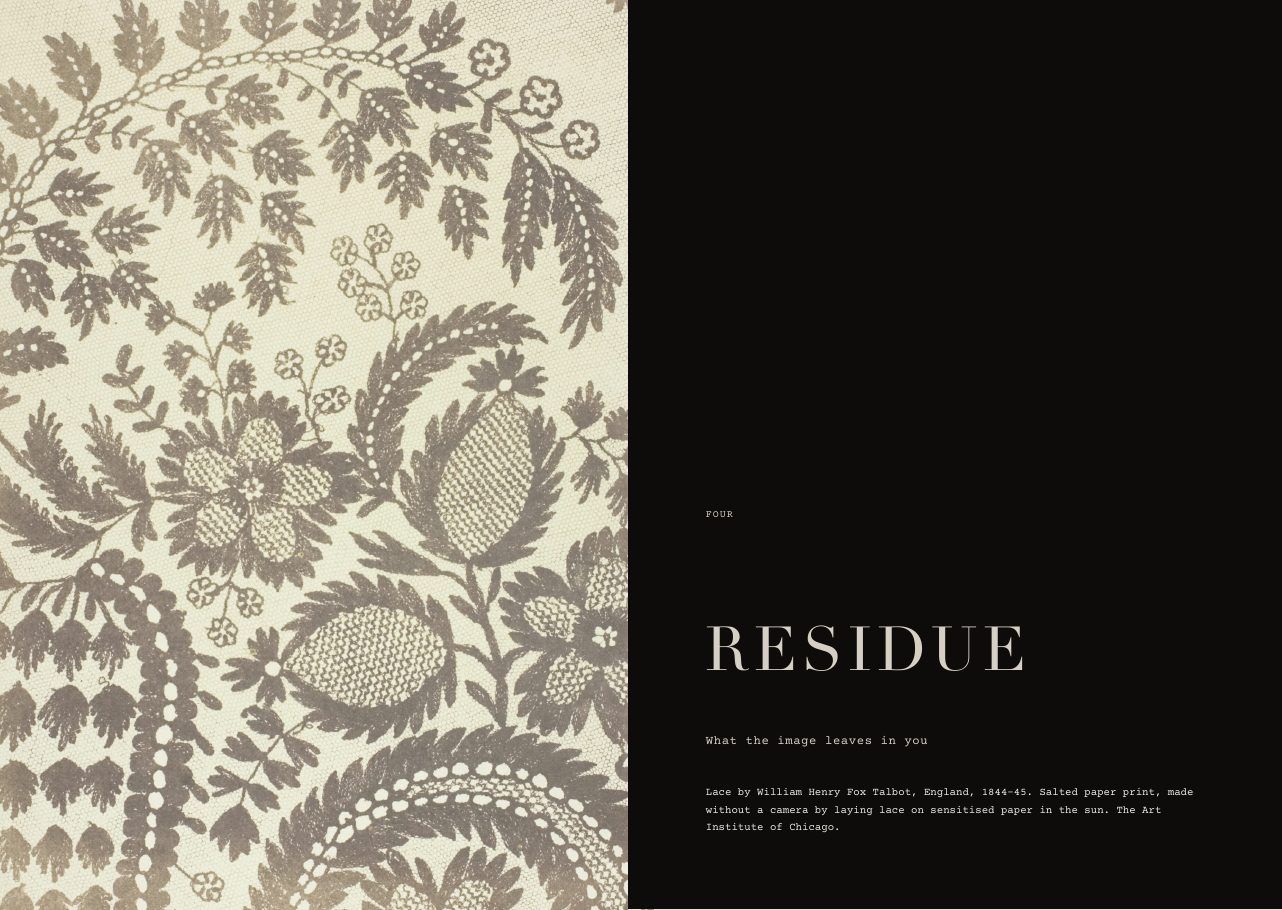
The argument is structural. Remove the openings and there is no lace left — only knots. So lace is the extreme case of a craft that is legible only as absence, and the first textile whose aura was destroyed by a machine, between 1813 and 1851. Nottingham’s lace industry replaced the hands and then hired them back to tend the machines.
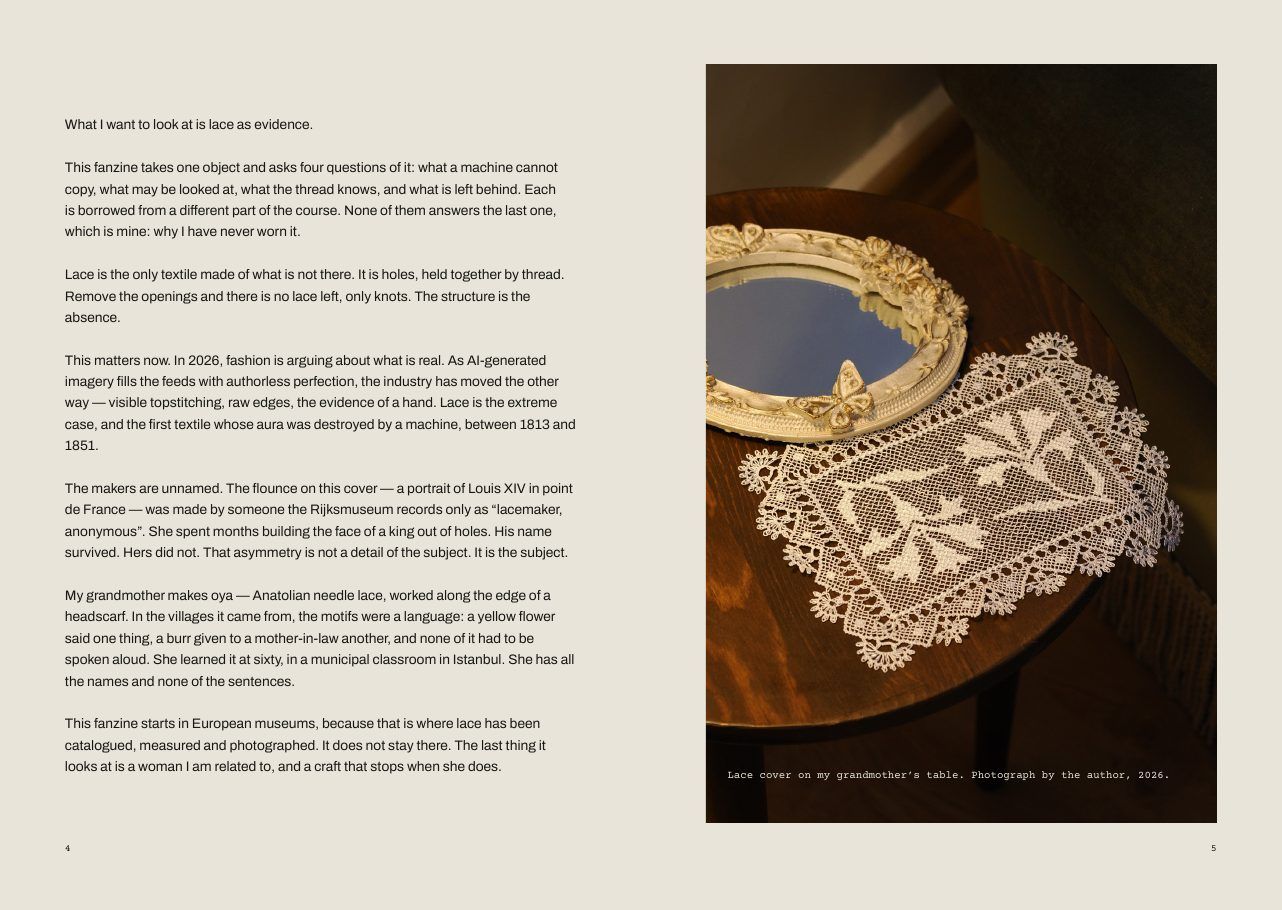
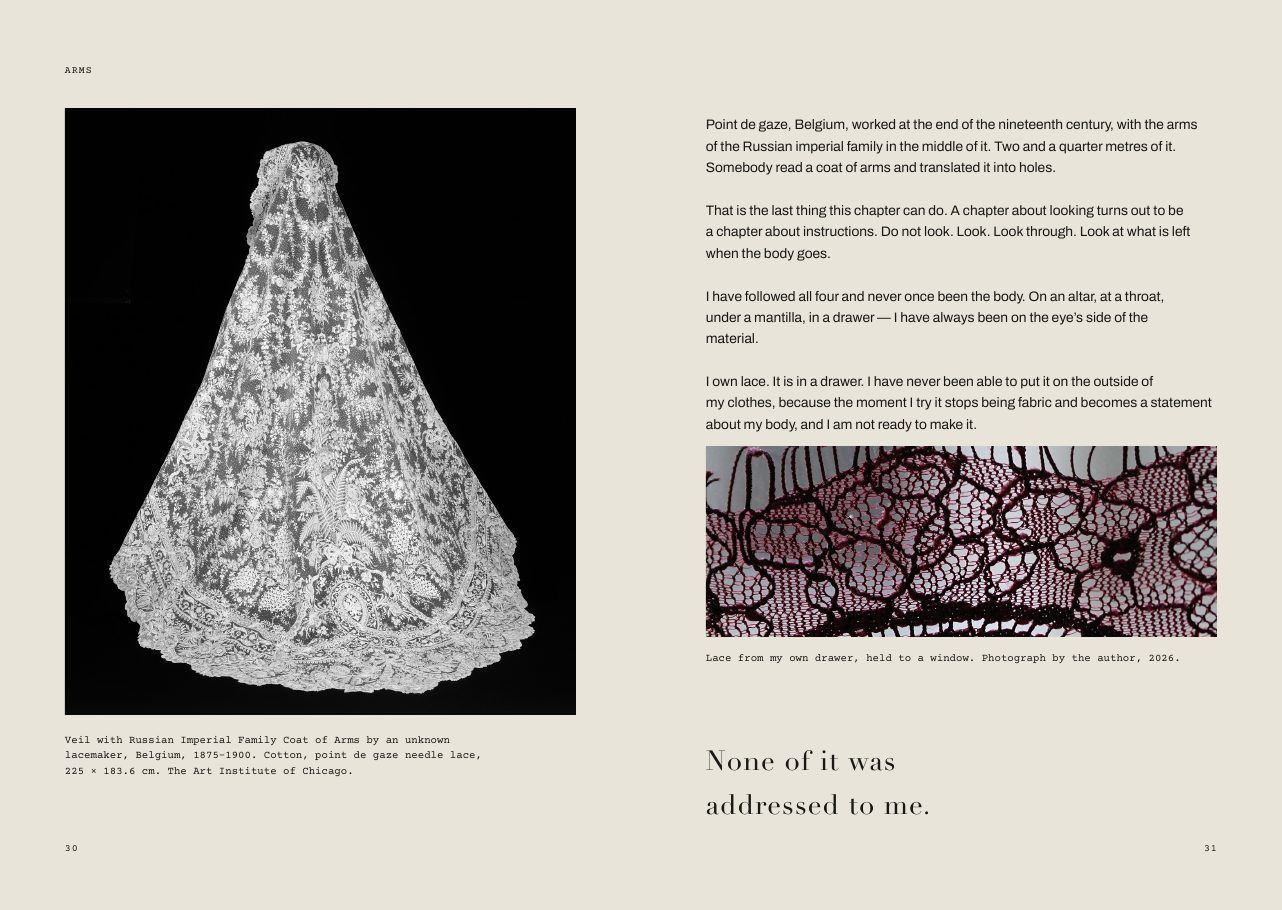
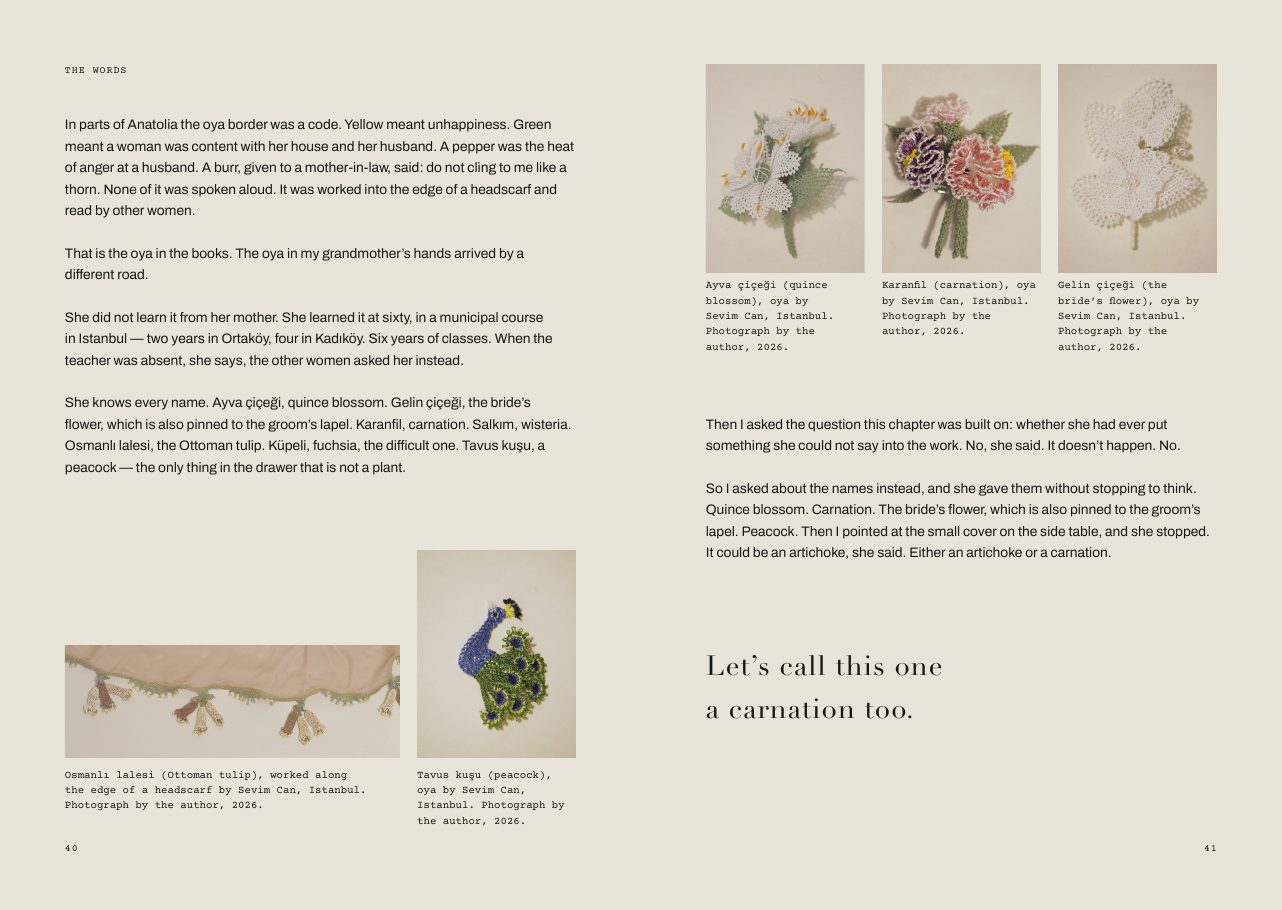
The makers are unnamed. The figure on the cover is a portrait of Louis XIV in point de France — the lacemaker who spent months building his face is anonymous. Museum records only go as far as “lacemaker.” My grandmother makes oya — Anatolian needle lace, worked along the edge of a headscarf, a language with a vocabulary I can read but not speak. Hers is the one piece in the book that survived, and the one that is not catalogued.
I wrote the text, selected and credited every museum image, photographed my own objects, and designed the document.
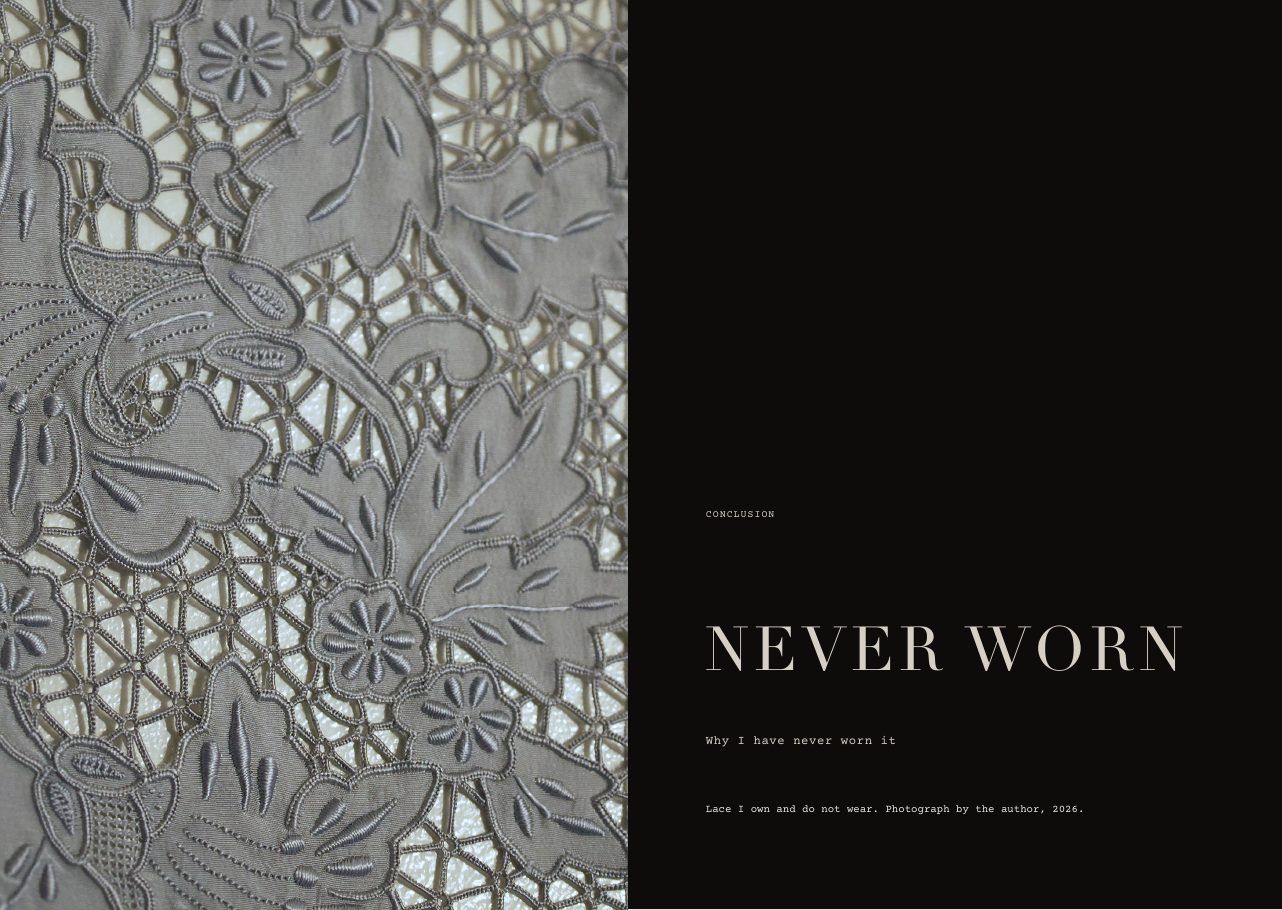
No one made it. I am the one who kept it.
The document
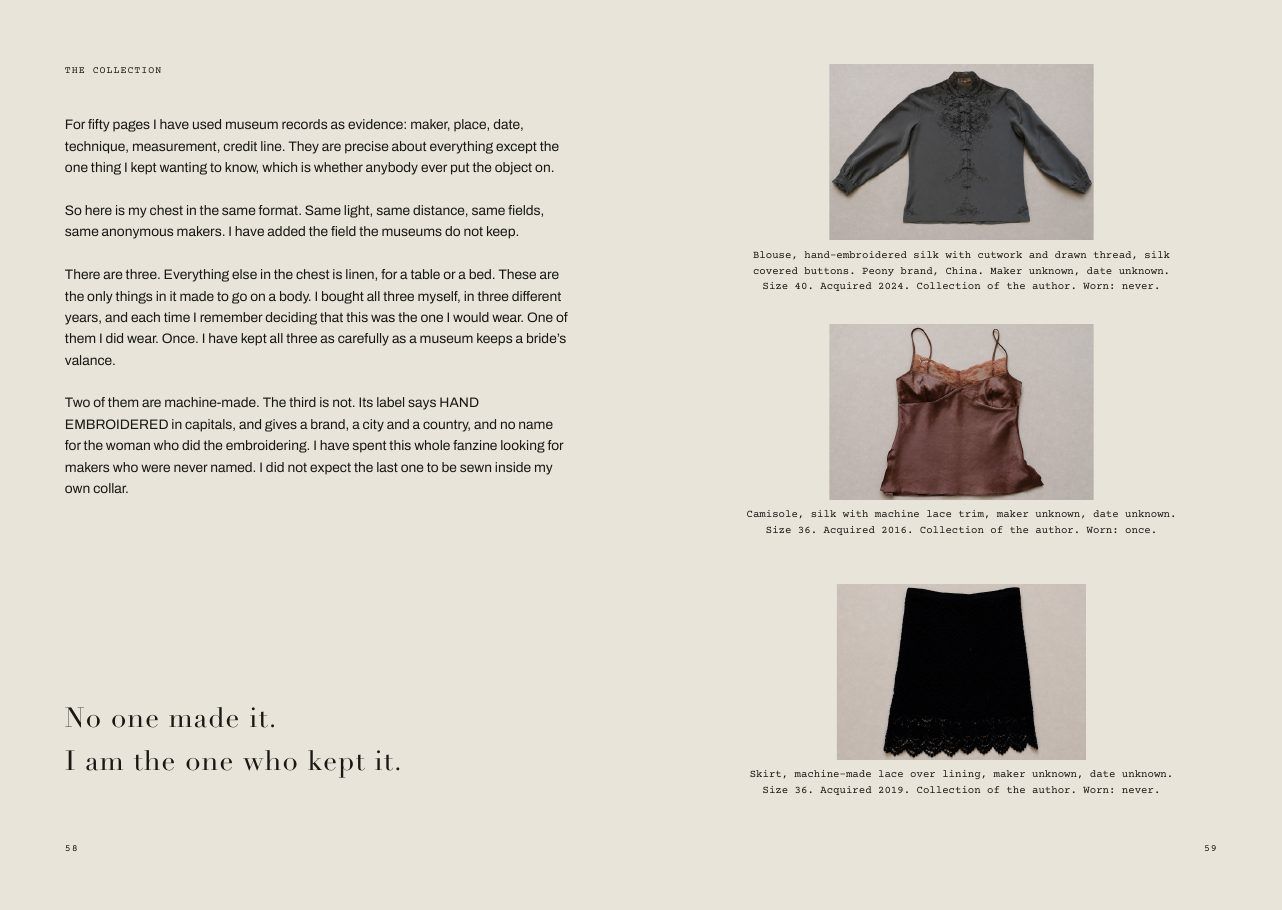
Museum photographs are reproduced with their full catalogue credits inside the document — The Metropolitan Museum of Art, The Art Institute of Chicago, The Cleveland Museum of Art, Nottingham Castle and the National Gallery of Art, Washington — shown here, as in the original, for academic study and criticism. The writing, the object photography and the layout are my own.
Credits